When the Buffer Disappears
The first electric tow into Joshua Tree taught me that margin is not optional.

The first thing I learned about towing the Airstream with an electric truck is that the truck can do it.
The second thing I learned is that “can do it” is not the same as “can do it casually.”
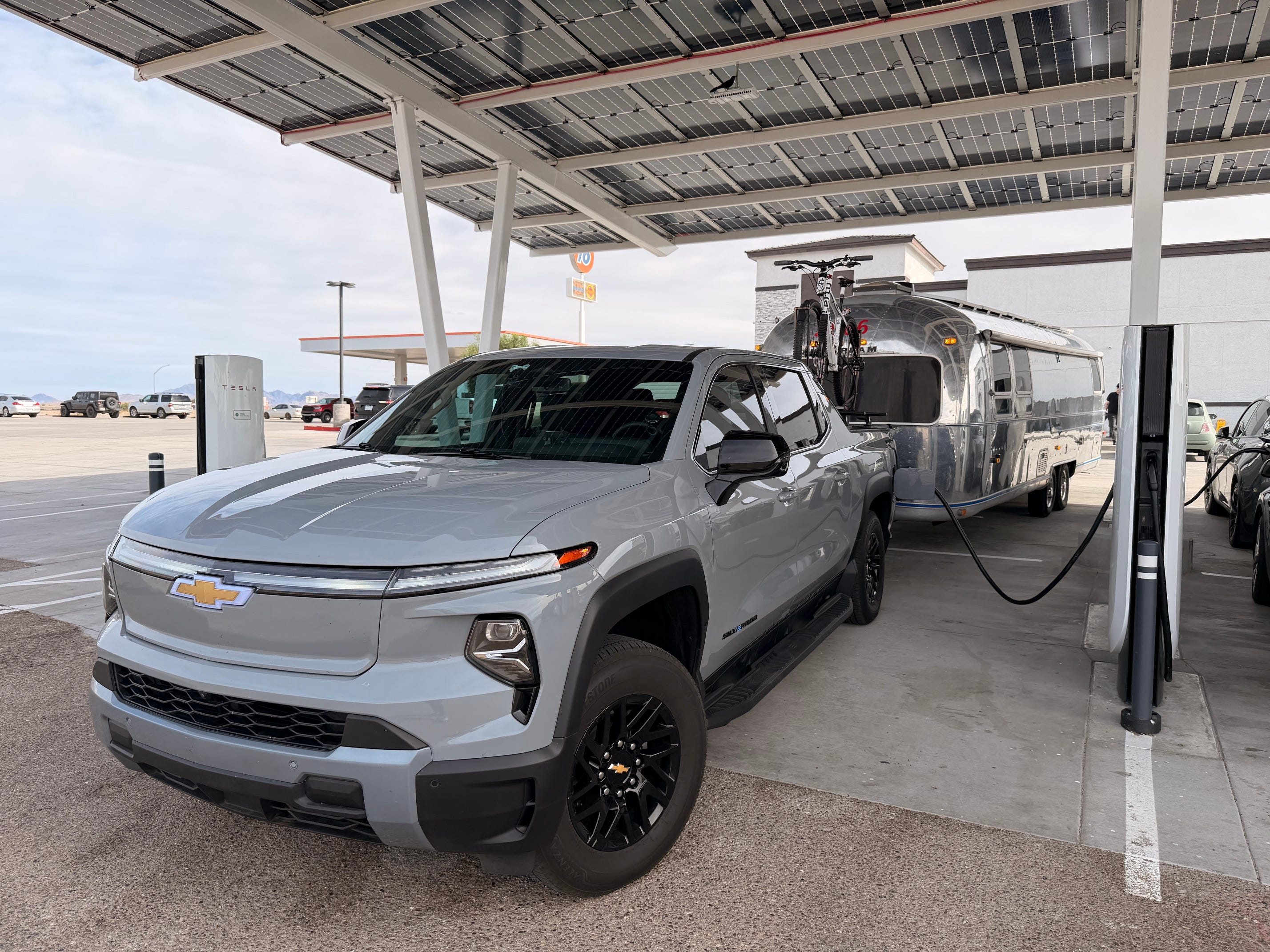
Those lessons arrived on the same day, somewhere between Distant Drums RV Resort in Camp Verde, Arizona and Joshua Tree RV Park in California, with six thousand pounds of 1979 Airstream behind me and a brand-new 2025 Silverado EV LT Extended Range in front of me, behaving beautifully while quietly revising my understanding of the map.
I had traded the diesel at Distant Drums. The diesel had been bluntly competent in the way a good tow vehicle can be. It pulled. It grumbled. It drank fuel at a rate that suggested petroleum was a personal hobby. It did not ask me to think very hard about range. Diesel stations exist in the American West the way churches and Dollar Generals exist in the South: perhaps not exactly where you want them, but generally close enough to keep theology and logistics moving.
The electric truck changed the question.
It did not lack power. Electric motors do not build confidence with noise. They simply apply torque, smoothly and immediately, without the little theatrical speeches internal combustion likes to make on grades. The Silverado EV pulled the Airstream out of Camp Verde with a calmness I appreciated immediately.
The new problem was not muscle.
The new problem was math.
Before I left Distant Drums, I planned the route conservatively. This was my first real tow with the new truck, and I had no interest in turning the maiden voyage into a cautionary tale told by strangers on forums. I routed myself through chargers with what seemed like a generous buffer: roughly a hundred miles of indicated range remaining at Joshua Tree. That felt reasonable. Adult. Mature, even, which is not a word often associated with a man who has chosen to live in an aluminum tube from the Carter administration.
The early miles encouraged me.
The truck was quiet. Too quiet, almost. Without the diesel covering everything, I could hear more of the trailer. Not alarming sounds. Just the small aluminum vocabulary of a rolling house being towed across Arizona: flexes, settles, wind at the seams, the occasional cupboard noise that always sounds like a confession. The Airstream had been making those sounds all along. The diesel had been politely shouting over them.
At each charging stop, I checked the trailer, looked at the tires, walked around the hitch, and bought coffee I did not strictly need. I watched electrons enter the truck at a speed that felt both miraculous and not quite fast enough. I made small talk when people asked the predictable questions, because an electric pickup attached to a vintage Airstream is apparently not something the public is prepared to let pass in silence.
The questions were fair. I was asking most of them myself. The road, as usual, had decided to convert theory into tuition.
The trouble with the route into Joshua Tree is not that there are no chargers anywhere. It is that the charging map thins in the precise way that makes a towing brain start doing extra arithmetic. East of Joshua Tree, the fast-charging options are not spaced the way a nervous man with a trailer would design them. You commit to the leg because the math says the leg works, and then the environment begins submitting amendments.
Headwind.
Heat.
Grade.
A trailer with the aerodynamic profile of a beautiful appliance.
The buffer began to shrink.
At first I watched it with professional detachment, or what I hoped looked like professional detachment to the dashboard. The estimate dropped, then dropped again. The truck was still pulling well. Nothing was wrong mechanically. That is one of the odd psychological features of electric towing. A diesel can make distress audible. An EV can be perfectly serene while the numbers become less entertaining.
By the last hundred miles, the cushion I had planned was no longer a cushion. It was a memory. I slowed down. I watched the energy screen. I checked the mirrors. I negotiated silently with the wind, which is a useless activity but one I recommend if you need something to do with your jaw muscles.
There is a particular feeling that comes when you are towing your house toward a destination and the destination remains theoretically reachable but no longer comfortably so. It is not panic. Panic is too loud. This is quieter and more managerial. The brain opens a spreadsheet you did not ask for and begins running scenarios.
If I arrive with ten percent, fine.
If I arrive with seven percent, acceptable but annoying.
If I arrive with five percent, that is a lesson.
If I do not arrive, that is a newsletter nobody wants to write.
I arrived with four percent.
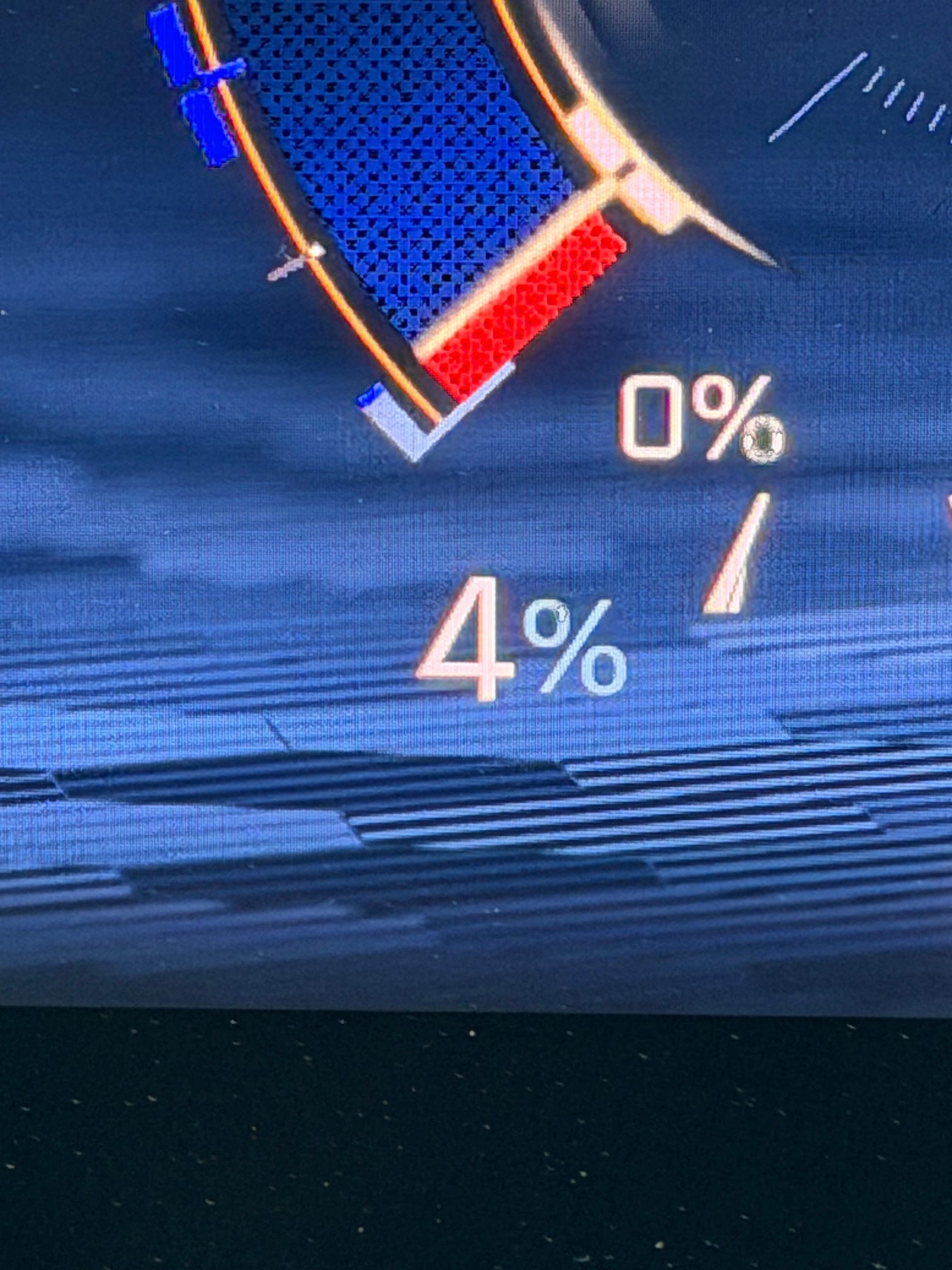
Four percent is not empty. That is what the optimist says. Four percent is also not a plan. That is what the man sitting in the parked truck says after he has successfully backed the Airstream into the site and can finally admit how much attention the last stretch required.
I unhitched. I leveled. I plugged in the trailer. I sat in the doorway for a while and let the day settle around me.
New truck, old trailer, different desert, altered math. The site was quiet in that particular Joshua Tree way, as if the landscape had no interest in my spreadsheet and was willing to let me catch up on my own time.
The lesson of that day was not that electric towing is impossible. It plainly is possible. The Silverado EV had done the job. It had pulled the Airstream through the desert without complaint. The route had worked. The problem was not capability.
The problem was margin.
Diesel had let me be a little lazy about margin. Not irresponsible, exactly, but comfortable in a way that can become its own kind of blindness. The electric truck did not allow that. It made the invisible variables visible. Wind mattered. Elevation mattered. Charger spacing mattered. Arrival percentage mattered. The map had acquired a new layer, and I was now responsible for reading it.
That is not a bad thing.
Full-time RV life has always been an education in margins. Tank levels. Weather windows. Site lengths. Tire pressure. Work calls scheduled around signal. Propane in cold weather. Dog walks before storms. The road is patient, but it is not sentimental. It will teach the same lesson as many times as necessary, using whatever equipment you happen to be proud of at the moment.
On that first electric tow, the equipment was a truck with a massive battery and a quiet drivetrain.
The lesson was the old one.
Leave more room than you think you need.
The desert will use it.
We saw a guy at thousand trails that has a roof dam. Maybe that would work?